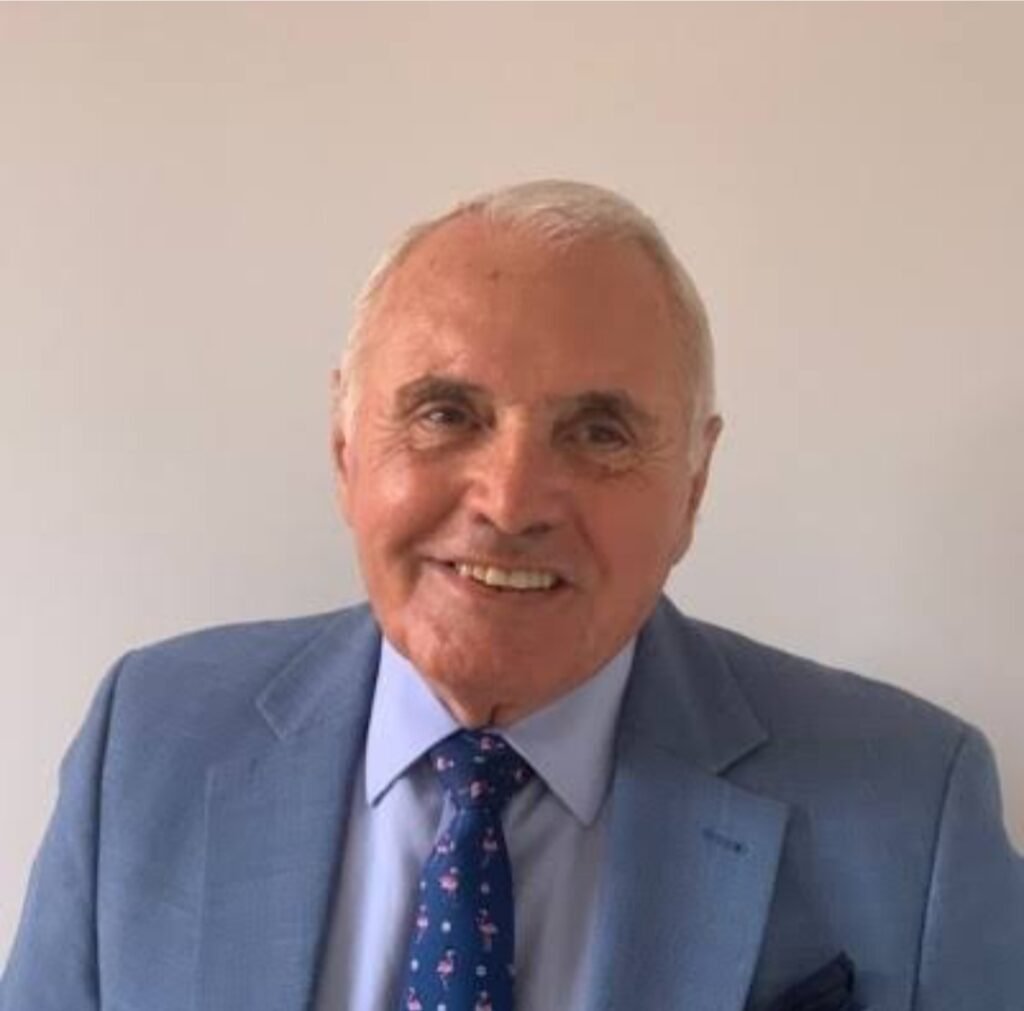
Michael G. Harvey: The Construction Legend Who Built Britain’s Roads and Now Wants to Fix the Industry
From a wartime childhood with nothing to his name, Harvey spent fifty years shaping the infrastructure the UK runs on. Now, at 83, he’s writing the playbook he wishes he’d had.
There are engineers who manage projects. Then there are the rare few who shape entire industries. Michael G. Harvey belongs to the second category — though he would never say so himself.
Born in 1942 during the height of the Second World War, Harvey grew up in a household held together by grit and little else. Seven siblings. A mother whose hands stayed raw from washwater. A father who boxed three fights a week to keep the lights on.
“Life was effort and endurance,” Harvey recalls. “Love wasn’t spoken — it was shown through work.”
No university place was ever on the table. What Harvey had instead was sharper: an insatiable need to understand how things worked — systems, people, projects, nations. That hunger drove him into the Royal Navy, which gave him something no lecture hall could: the world itself.
From Bricklaying to the Westway
Harvey started with his hands in the ground, learning the bricklaying trade in postwar England. But it was travel that educated him. The Navy carried him across continents, exposing him to different industries, cultures, and ways of solving hard problems. He spent four years in South Africa before returning to England in 1966 to join John Laing on the M1 Motorway project in Chesterfield — one of the most ambitious road-building programmes the country had ever seen.
He never looked back.
His role quickly expanded beyond materials and machinery. At the Westway Project in London — the elevated A40 that cuts through West London above rooftops and streets — Harvey was entrusted with managing the White City section and the stretch running toward Shepherd’s Bush. It was there that both his engineering capability and his leadership instincts sharpened under real pressure.
“Those years shaped my understanding of leadership, delivery, planning, and responsibility under pressure,” he says.
His work on the M1 Motorway’s Chesterfield section and the Western Avenue Flyover produced infrastructure that millions of commuters and freight drivers rely on every single day. These are not legacy projects in the abstract sense. They are physical arteries still pumping.
Five Decades Across Four Continents
What followed was a career that read less like a CV and more like a construction atlas. Harvey moved from the motorways of England to major infrastructure projects across Malaysia, Indonesia, the Philippines, and Hong Kong. Decade after decade, in some of the most logistically complex environments on earth, he managed concrete technology, earthworks, and heavy machinery at scale.
But the further his career took him, the more clearly he saw a problem the industry refused to confront honestly.
“Projects suffered not because people lacked effort,” he says, “but because systems lacked integration, structure, planning, communication, and disciplined leadership.”
The construction industry was brilliant, Harvey believed — and profoundly fragmented. He spent years thinking about how to fix it.
The Books, the Platform, and the Gateway
In 2024, at an age when most would be long retired, Harvey joined LinkedIn to begin sharing what fifty years had taught him. The response confirmed what he had long suspected: the industry was hungry for exactly this kind of structured, experienced voice.
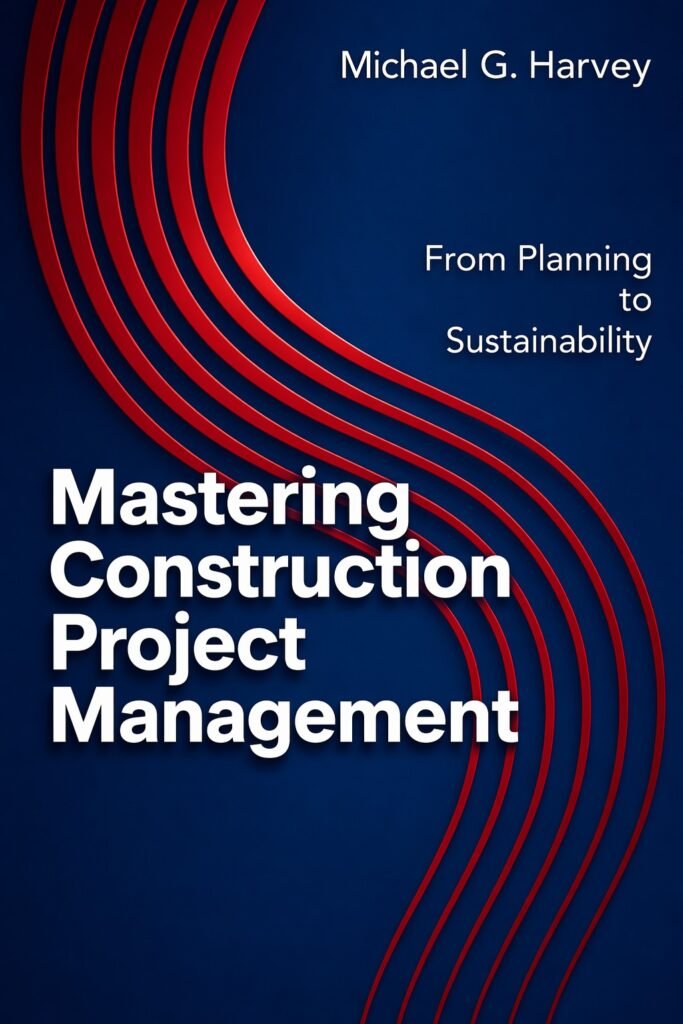
That LinkedIn presence evolved into The Horizon Knowledge Gateway — a publishing and knowledge platform through which Harvey has now written eight books, seven of which are available on Amazon Kindle. They include Mastering Construction Project Management, his landmark operational blueprint for modern site managers, alongside Site Agent’s Compass, Mastering Project Controls, Mastering Risk as a Leadership Discipline, Mastering Planning & Scheduling Vol. I and Vol. II, Building Excellence: Direct Labour in Modern Construction, and the Production Rates & Incentive Manual.
Together, they form something close to a complete operating system for construction leadership — grounded not in theory, but in the lived experience of someone who has stood on the sites himself.
“Knowledge alone does not build big projects,” Harvey says simply. “Applied wisdom and decisive leadership do.”
A Legacy Still in Progress
Harvey’s story is, at its core, a rebuke to the idea that circumstance determines outcome. A boy who grew up without access to formal education became one of the most credible voices in a £500 billion global industry. The infrastructure he helped build will outlast him by generations. The frameworks he is now publishing may outlast that.
His advice to the next generation of construction professionals reflects everything his early life forced him to learn: build on rock-solid foundations, plan rigorously for risk, and never confuse activity with progress.
Some of the best lessons, it turns out, come long after the classroom.
Connect with Michael G. Harvey on LinkedIn. Read the summary of his flagship book on Mastering Construction Project Management